
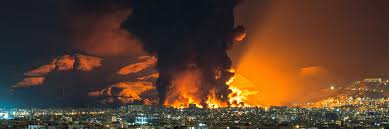
The Middle East is witnessing one of its most dangerous escalations in years as tensions between Iran and Israel intensify into a broader regional conflict. The situation worsened dramatically after Israeli forces launched strikes on Iran’s critical energy infrastructure, including facilities linked to the massive South Pars gas field. The attack marked a significant escalation, targeting not just military assets but the economic backbone of Iran’s energy sector.
Iran responded swiftly with a coordinated wave of missile and drone strikes targeting strategic locations across the Gulf. Reports indicate that energy installations in countries such as Saudi Arabia, Qatar, and the United Arab Emirates were either damaged or temporarily shut down. These retaliatory strikes signaled a shift in warfare tactics, where energy infrastructure has become a primary target, amplifying the global consequences of the conflict.
The United States has also been drawn deeper into the crisis, providing intelligence and logistical support to Israel while deploying additional naval forces to the region. American officials have emphasized the importance of maintaining stability in global energy markets, but their involvement has further complicated diplomatic efforts.
The global economic impact has been immediate. Oil prices surged past $100 per barrel, triggering fears of inflation and economic instability worldwide. Countries heavily dependent on Gulf energy exports are scrambling to secure alternative supplies, while shipping companies are reconsidering routes through increasingly dangerous waters.
On the humanitarian front, the consequences are equally severe. Infrastucture damage has led to power outages, water shortages, and disruptions in essential services across affected regions. Civilians are bearing the brunt of the escalation, with thousands displaced and growing concerns over access to food and healthcare.
Diplomatic efforts to de-escalate the crisis have so far yielded little progress. Regional powers are divided, with some supporting Iran’s position while others align more closely with Israel and Western allies. The absence of a unified international response has made it difficult to establish a clear path toward peace.
Analysts warn that the situation could spiral into a full-scale regional war if tensions continue to rise. The involvement of multiple state and non-state actors increases the risk of miscalculation, where even a minor incident could trigger a much larger conflict.
As the world watches closely, the Middle East stands at a critical crossroads. The coming weeks will likely determine whether diplomatic efforts can contain the crisis or whether the region will descend into a prolonged and devastating war.
Humanitarian concerns are also emerging, as thousands of seafarers remain stranded aboard vessels unable to navigate the strait safely. International organizationsInternational organizations are calling for the establishment of secure corridors to ensure their safety, but progress has been slow amid ongoing hostilities.
Experts warn that the situation could worsen if diplomatic solutions are not found quickly. A prolonged disruption of the Strait of Hormuz would have far-reaching consequences, potentially triggering a global economic crisis.
As tensions remain high, the international community faces a critical challenge: balancing the need to maintain open trade routes with the imperative to avoid further escalation in an already volatile region.