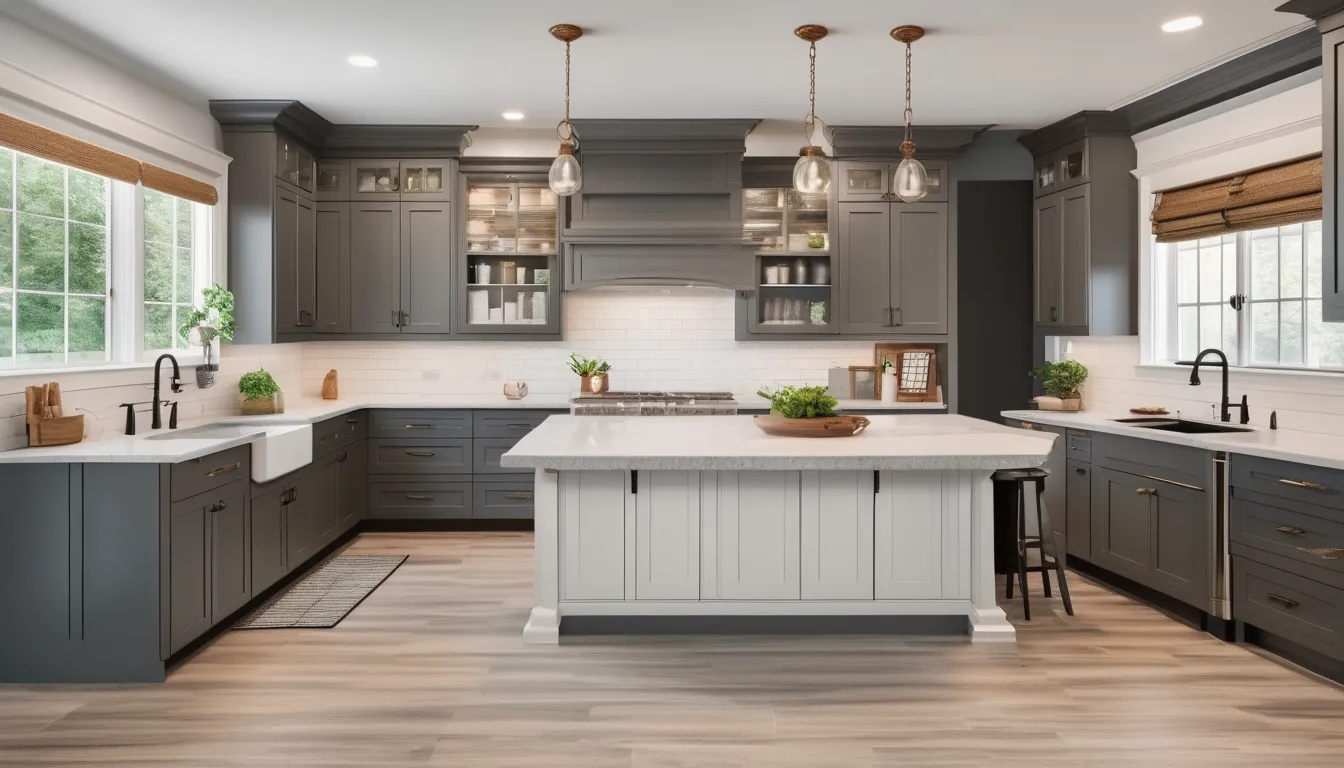
If you’re planning an outdoor grill island on Marco Island, start by picturing sunlight, prevailing winds, and how close the unit will sit to your house and neighbors. Pick corrosion‑proof materials and plan ventilation, gas, and electrical runs before you order appliances. You’ll also need to factor in permits, HOA rules, and a realistic budget with local contractors — and there are a few common mistakes you’ll want to avoid next Outdoor Grill Island Installation.
Selecting the Best Location on Your Marco Island Property
Where on Marco Island will get the most use and still meet safety and convenience needs?
You’ll place the grill where sun exposure balances comfort and cooking needs—morning sun for breakfasts, afternoon shade for heat.
Visualize clear walkways, sightlines to the pool, and seamless landscape integration with existing palms and pavers.
Position near utilities and waste bins, but keep a safe distance from combustible foliage and structures.
Choosing Materials That Resist Salt Air and Humidity
Because salt air and humidity will accelerate corrosion, you’ll want materials that stand up to marine conditions without constant upkeep.
Choose corrosion-resistant options like 316 stainless steel, powder-coated aluminum, and marine-grade plywood with an epoxy seal.
Visualize tight seams, stainless fasteners, and weatherproof finishes on surfaces and cabinets.
Plan drainage, removable panels for cleaning, and simple maintenance routines to prolong lifespan and appearance.
Designing Ventilation, Gas, and Electrical Hookups Safely
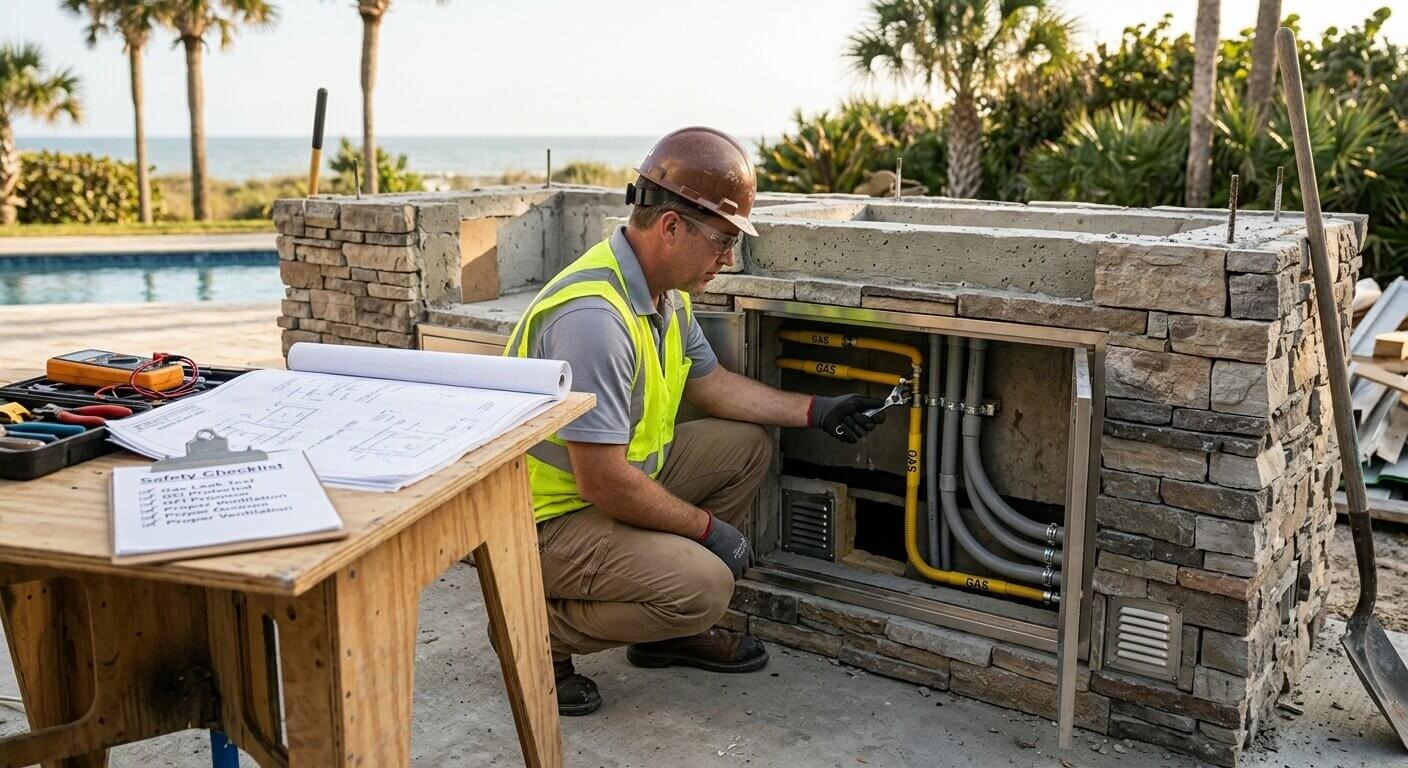
When you plan your grill island, picture airflow paths and clearances so heat and grease can’t build up in cabinets—follow manufacturer specs for ventilation openings and stainless baffle or mesh filters.
Run gas lines with accessible shutoffs and a licensed installer to pressure-test joints, and route electrical circuits in conduit with GFCI protection and weatherproof outlets.
Keep combustible storage separate from burners and mark service points visibly so future maintenance is safe and straightforward.
Proper Ventilation Requirements
Although outdoor grill islands seem straightforward, you’ll need to plan ventilation, gas, and electrical hookups with precision to keep the unit safe and functional.
You’ll assess ventilation types—hooded, soffit, or natural cross-ventilation—position vents to prevent heat traps, and map airflow considerations around cabinetry and nearby structures.
Measure clearances, use corrosion-resistant vents, and ensure unobstructed exhaust paths for safe, efficient operation.
Safe Gas And Electricals
If you want your outdoor grill island to be both safe and reliable, plan the gas and electrical systems together from the start so piping, wiring, and ventilation don’t conflict.
Visualize clear channels: route gas lines with accessible shutoffs, protect connections, and test for leaks to ensure gas line safety.
Place outlets on GFCI circuits per electrical code, and keep wiring away from heat and moisture.
Navigating Marco Island Permits, Codes, and HOA Rules
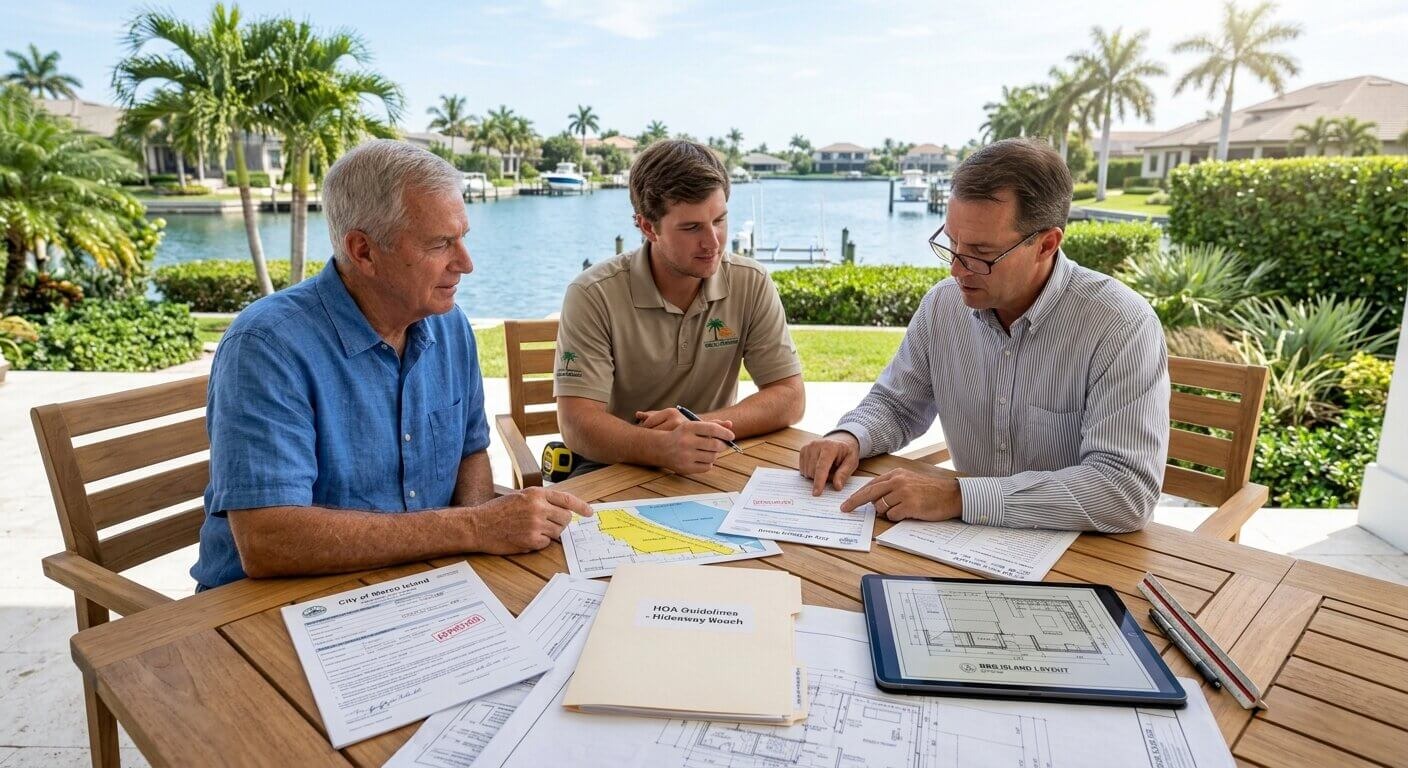
Before you start construction, check Marco Island’s permit requirements so you know which applications, fees, and site plans you’ll need to submit.
Confirm your design meets local building codes for gas, electrical, and fire clearances, and have measured drawings ready to show inspectors.
Don’t forget to review your HOA covenants for required approvals, exterior material restrictions, and any setback or screening rules that could affect placement.
Permit Requirements Overview
When you’re planning an outdoor grill island on Marco Island, you’ll need to navigate city permits, Florida building codes, and any HOA rules that apply to your lot.
These three layers each control different elements—setbacks, utilities, structural components, and finished appearance—so you should map requirements for each before finalizing designs.
Identify permit types, document drawings, verify HOA covenants, and follow the application process timeline.
Building Codes Compliance
Because Marco Island’s codes layer municipal, state, and HOA requirements, you’ll need a clear checklist that ties each island component—foundation, gas and electrical hookups, ventilation, setback, and materials—to the exact code sections and permit forms that apply.
Map recent building code updates, note required drawings, schedule safety inspections, photograph compliance points, and keep permit copies organized for inspectors and future maintenance.
HOA Rules And Approvals
If you’re installing a grill island on Marco Island, you’ll need to navigate not just city and state permits but also HOA covenants that often dictate materials, colors, setbacks, and screening.
Gather the HOA’s architectural guidelines, application forms, approval timelines, and any required neighbor notifications up front so you can align drawings and permit submissions to avoid costly revisions.
Review design guidelines closely, photograph existing conditions, prepare scaled plans, submit complete packets, track approval processes, and expect revisions.
Budgeting, Timeline, and Hiring Local Contractors
Though you can sketch a plan on paper, budgeting accurately means breaking the project into line items—grill unit, cabinetry, countertop, gas or electrical work, foundation, permits, and contingency—so you can assign realistic costs to each and spot where to economize.
Outline budget allocation, map a phased timeline with milestones, and prioritize contractor selection: verify local licensing, insurance, references, and a clear written scope before hiring.
Preventing Common Installation Mistakes and Long‑Term Maintenance
When you plan your grill island installation with an eye for durability and serviceability, you’ll avoid the small mistakes that become expensive headaches later—misaligned gas lines, insufficient clearance for ventilation, flimsy cabinet supports, and inaccessible shutoffs are common culprits.
Inspect routing, level masonry, and secure fasteners to prevent installation oversight.
Schedule routine maintenance tips: clean burners, check seals, lubricate hinges, and test shutoffs for safe, long life.
Conclusion
By planning carefully and choosing corrosion‑resistant materials, you’ll place your grill island where sun, breeze and sightlines work for you while staying clear of combustible risks. Design ventilation and concealed gas/electrical runs to meet code, then check Marco Island permits and HOA rules before hiring licensed local contractors. Stick to a realistic budget and timeline, avoid common installation errors, and schedule simple seasonal maintenance so your outdoor kitchen stays safe, functional, and attractive for years.